If a condo’s amenity deck looks impressive but does not fit how you actually live, you may end up paying for features you rarely use. That is especially important in Kakaako, where many towers in 96813 offer everything from co-working lounges to lap pools, dog parks, guest suites, and private dining rooms. If you are weighing lifestyle, monthly costs, and long-term value, this guide will help you sort the useful from the merely attractive. Let’s dive in.
Start With Your Daily Routine
In Kakaako, the smartest way to compare condo amenities is to start with your real routine, not the marketing brochure. The most useful question is simple: which spaces will make your week easier, more comfortable, or more enjoyable?
Hawaii condo guidance also makes clear that amenities are only one part of the picture. Common elements often include lobbies, corridors, parking areas, pools, gyms, roofs, and major pipe and electrical systems, while house rules may govern pets, quiet hours, pool hours, guest parking, and fines. That is why you should review the amenity list together with maintenance fees and association documents.
Understand Kakaako’s Amenity Mix
Kakaako is part of a 600-acre urban district shaped around parks, open space, shopping, entertainment, and a pedestrian-oriented setting. Within that, Ward Village is a 60-acre master-planned community that emphasizes parks, bike paths, recreation, art, and a live-work-play environment near Ala Moana Beach Park, downtown Honolulu, and Waikiki.
That planning vision shows up clearly in the buildings themselves. In Kakaako, condo amenities often blend four lifestyle categories: resort-style recreation, work-from-home support, entertaining space, and storage for beach or outdoor gear.
Resort-Style Amenities
Some towers lean heavily into wellness and leisure. Waiea lists a fitness center with yoga studio, locker rooms with steam and sauna, an infinity-edge pool with cabanas, a golf simulator, cinema, lounges, guest suites, a library, and a sunset bar.
Aeʻo adds a 25-meter fitness pool, private cabanas, dining areas, a gym, spa, movie theater, and karaoke lounge. A‘ali‘i highlights a sky deck, fitness center, yoga room, pool and spa, cabanas, a great lawn, and indoor-outdoor event rooms.
Work-From-Home Features
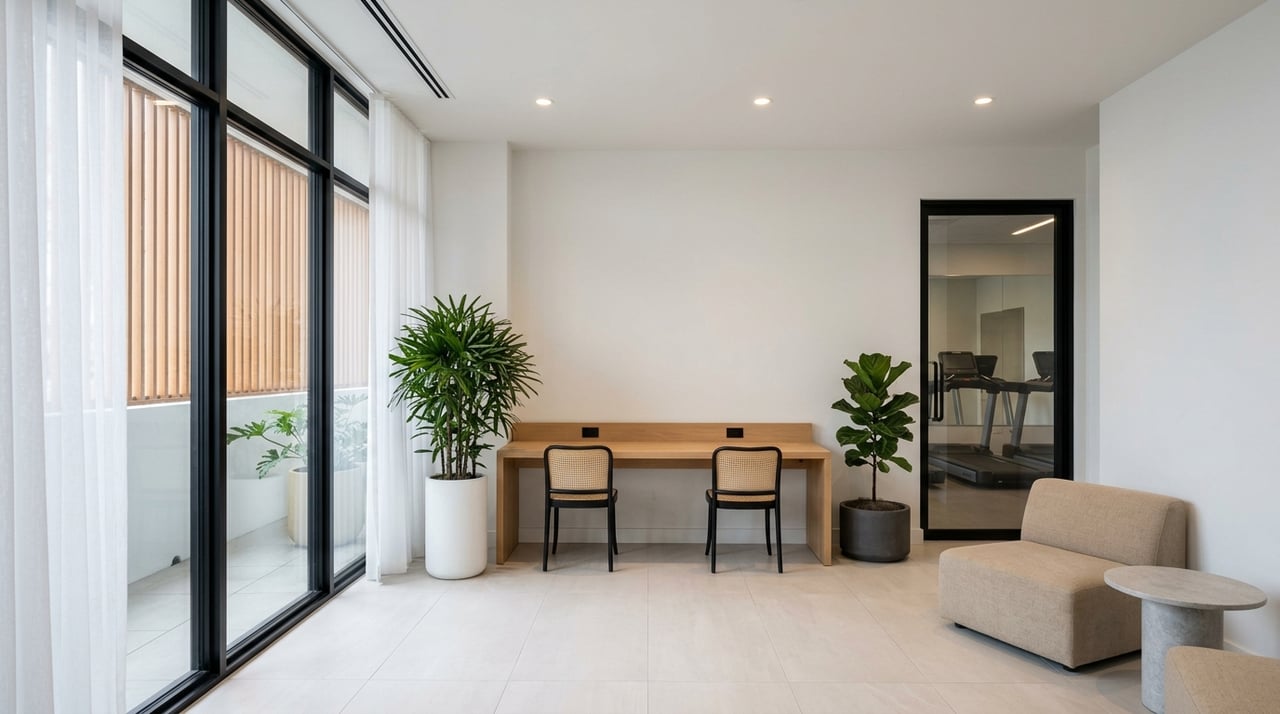
Other buildings reflect how many owners now want flexible work space close to home. Ulana Ward Village lists co-working spaces and private indoor-outdoor rooms, while Ke Kilohana includes co-working space with meeting rooms and Wi-Fi.
If you regularly take video calls, need separation from your living room, or want a polished place to meet guests, those features can carry real daily value. If you rarely work from home, they may be less important than they first appear.
Hosting and Social Spaces
For some buyers, the best amenity is not a pool but a place to gather. Private dining rooms, event lounges, barbecue areas, clubrooms, movie theaters, and cabanas can make a noticeable difference if you host family or enjoy spending weekends at home.
Waiea includes private guest suites and dining rooms. Ke Kilohana offers event lounges and a private movie theater, while Ulana and A‘ali‘i both emphasize indoor-outdoor spaces designed for social use.
Pet and Lifestyle Storage
In a neighborhood close to parks and beach activity, pet amenities and gear storage can matter more than expected. Ulana and Waiea include dog parks, and Ke Kilohana and Ulana offer surfboard and bike storage or surfboard racks.
If you own a dog, surf regularly, or prefer a low-friction daily routine, these practical features can improve how the building fits your life. They may also help reduce clutter inside your unit.
Why Amenities Affect Monthly Costs
Amenities are not free, even if you rarely use them. In Hawaii, maintenance fees fund monthly common expenses and reserves, and those expenses can include management, common-area electricity, security, insurance, landscaping, window washing, elevator service, pool service, and reserve contributions for future repairs.
You pay your share regardless of personal usage. That means a resident who never uses the theater or spa still helps support it through monthly fees.
The Hawaii Department of Commerce and Consumer Affairs notes that buildings with pools, multiple elevators, gyms, tennis courts, full-service management, multipurpose rooms, theaters, and similar amenities should generally have substantially higher maintenance fees than similar-sized buildings with fewer amenities. In other words, a larger amenity package usually means higher operating and reserve costs.
Low Fees Are Not Always a Bargain
A low monthly fee can look appealing, but it does not always mean better value. If an amenity-heavy building has fees that look unusually similar to a simpler building, that can be a sign to look more closely at reserves.
According to DCCA guidance, insufficient reserves can lead to special assessments, borrowing, or deferred repairs. It can also make units harder to sell if fewer lenders are willing to finance the building.
That is why the right question is not just, “What is the monthly fee?” A better question is, “Does this building collect enough to maintain what it promises?”
Match Amenities to Your Lifestyle
The easiest way to narrow your options is to connect amenities to habits you already have. When you do that, your shortlist often becomes much clearer.
If You Work From Home
Focus on co-working rooms, meeting spaces, and places where you can take calls without sitting inside your unit all day. Ulana and Ke Kilohana both advertise these kinds of features.
If remote work is central to your week, this type of amenity may matter more than a dramatic pool deck. It supports your routine in a practical way.
If Fitness Is Part of Your Week
Look past the phrase “fitness center” and ask what the building actually offers. A real gym, yoga room, lap pool, spa, or wellness-focused setup may be worth more to you than a long amenity list filled with features you would not use.
Waiea, Aeʻo, and A‘ali‘i all emphasize wellness-oriented amenities. If exercise or recovery is part of your normal schedule, those buildings may align more closely with your priorities.
If You Like to Host
If you often have family visiting or enjoy entertaining at home, guest suites, dining rooms, lounges, barbecue areas, and event spaces can be highly useful. These spaces may allow you to host more comfortably without needing a larger private unit.
In that case, Waiea’s guest suites and dining rooms or the event-oriented spaces at A‘ali‘i, Ulana, and Ke Kilohana may deserve extra attention.
If You Have a Dog or Beach Gear
Pet and storage rules deserve a closer look. A dog park, bike storage, or surfboard rack can make your daily life noticeably easier, especially in a neighborhood built around outdoor activity.
At the same time, Hawaii condo guidance says pet allowances are controlled by the declaration, bylaws, and house rules. So even if a building appears pet-friendly, you still need to verify the documents.
If You Want Lower Carrying Costs
A simpler building may be the better fit if your goal is to keep monthly ownership costs as lean as possible. Paying for amenities you do not use can slowly erode the value of an otherwise strong purchase decision.
DCCA advises buyers to compare similar-sized and similar-aged condominiums when reviewing fees. If the difference in fees does not match the difference in amenities, that is a signal to study the reserve plan more carefully.
How Kakaako Compares Nearby
Kakaako appeals to many buyers because it blends newer high-rise living with a master-planned, pedestrian-oriented setting. The district is designed around public benefits, parks, recreation, and an active urban environment.
For buyers in 96813, that often creates a different feel from nearby alternatives. Amenities are part of that difference, but the surrounding daily experience matters too.
Kakaako
Kakaako is a strong match if you want a newer urban neighborhood with parks, retail, recreation, and a residential campus feel. Many buildings are designed to support both daily life and at-home leisure.
This can be especially appealing if you want your building and immediate neighborhood to work together as part of your routine.
Ala Moana
Ala Moana tends to feel more centered on shopping, dining, transit connections, and daily convenience. Ala Moana Center describes itself as the world’s largest open-air shopping center, with more than 350 shops and restaurants and over 160 dining options, while the city’s Ala Moana transit-oriented development plan emphasizes bike, pedestrian, and transit connections.
If your ideal routine is built around easy access to retail, dining, and movement through town, Ala Moana can be a useful comparison point.
Waikiki
Waikiki is more resort-oriented and has a different long-term conversation around coastal conditions. A state environmental impact statement describes Waikiki as a high-rise, high-intensity resort district, and current state resilience work there focuses on beach erosion and sunny-day flooding.
For some buyers, that energy and beachfront access are part of the appeal. For others, Kakaako or Ala Moana may offer a more day-to-day residential feel.
What to Verify Before You Buy
Once you find a building that fits your routine, the next step is document review. This is where you confirm whether the lifestyle you imagine is actually supported by the association’s rules and finances.
Before you move forward, ask for and review:
- The declaration, bylaws, and house rules
- The current maintenance fee breakdown
- The annual association budget
- The reserve study
- Confirmation that the project is registered in Hawaii’s condominium database
The governing documents can clarify permitted uses, pet rules, insurance requirements, quiet hours, pool hours, guest parking, and late fees. The reserve study should show which project components the association is responsible for, when they may need repair or replacement, and the estimated cost.
If a fee structure looks unusually low for a building with a long amenity list, treat that as a prompt for deeper review. In Hawaii, the better comparison is not just today’s monthly number, but whether the building is adequately funding both current operations and future upkeep.
Choosing the right Kakaako condo is rarely about finding the building with the longest amenity list. It is about finding the one that supports your actual routine, fits your carrying-cost comfort level, and has documents and reserves that make sense for long-term ownership. If you want a clear, discreet comparison of Kakaako options that match how you live, Seiko Ono can help you evaluate the details with confidence.
FAQs
What condo amenities are most useful in Kakaako for daily life?
- The most useful amenities are usually the ones that fit your routine, such as co-working space for remote work, a real gym or lap pool for fitness, guest and event spaces for hosting, or surfboard, bike, and pet amenities for outdoor living.
How do condo amenities affect maintenance fees in Honolulu?
- In Hawaii condominiums, maintenance fees fund common expenses and reserves, so buildings with more amenities like pools, elevators, gyms, theaters, and full-service management generally have higher monthly fees than simpler buildings.
Are low maintenance fees in a Kakaako condo always a good sign?
- No. If a building has a large amenity package but unusually low fees, it may be a sign to review the reserve study and budget more closely to see whether future repairs and replacements are being funded adequately.
What documents should you review before buying a Kakaako condo?
- You should review the declaration, bylaws, house rules, maintenance fee breakdown, annual budget, reserve study, and project registration details to understand rules, costs, and long-term building planning.
Are pet-friendly amenities enough to confirm a Kakaako condo allows pets?
- No. Even if a building has a dog park or appears pet-friendly, pet allowances are controlled by the declaration, bylaws, and house rules, so you should confirm those documents before buying.
How is Kakaako different from Ala Moana and Waikiki for condo buyers?
- Kakaako is generally associated with newer, master-planned urban living with parks and residential amenities, Ala Moana is more shopping- and transit-centered, and Waikiki is more resort-oriented with a different coastal-risk discussion.