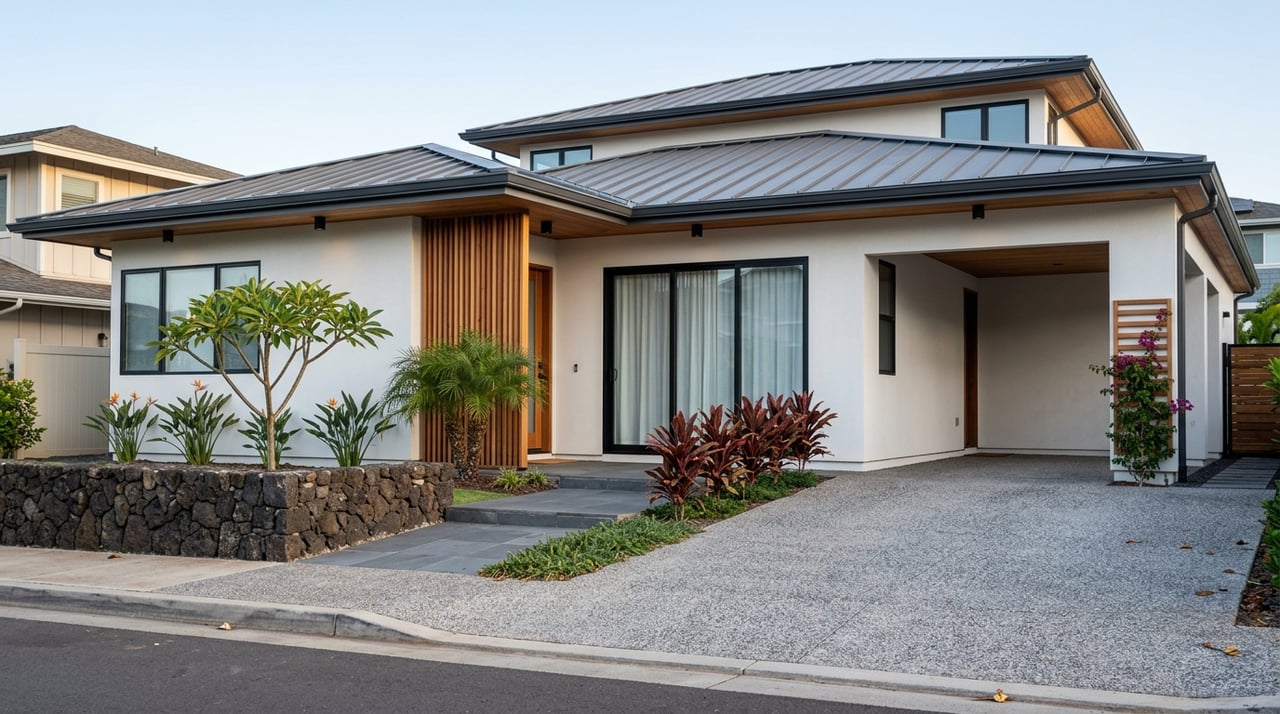
If your workday starts at Pearl Harbor, Tripler, or a medical campus in Central Oahu, where you live can shape everything from your morning routine to your long-term housing strategy. Aiea stands out because it offers established housing, strong freeway access, and everyday convenience in one of Oahu’s most connected areas. If you are weighing commute time, housing type, and lifestyle fit, this guide will help you see where Aiea makes sense and where it may ask for tradeoffs. Let’s dive in.
Why Aiea works for busy professionals
Aiea is a practical home base for people whose schedules depend on reliable access across the island. Honolulu County planning describes the Aiea-Pearl City area as a network of town centers connected by major highways and arterials, with a layout that developed around automobile travel.
That matters if you work early shifts, rotate between facilities, or simply want to avoid adding unnecessary friction to your day. Instead of choosing a location for walkability first, many buyers and renters in Aiea choose it for access, convenience, and established housing.
Key job centers near Aiea
Aiea is especially relevant for military and medical professionals because several major employment hubs are nearby or connected by the same freeway network.
Pearl Harbor access
Joint Base Pearl Harbor-Hickam lists Naval Base Pearl Harbor at 850 Ticonderoga Street, Building 150, JBPHH. For service members, civilian staff, and defense-related professionals, Aiea offers a location that keeps you close to one of the island’s most important employment centers.
The larger street and highway system supports that daily movement. In practical terms, Aiea is often a logical option if your priority is getting to base efficiently rather than living in a dense urban core.
Tripler commuting convenience
Tripler Army Medical Center is located at 1 Jarrett White Road and notes that it sits just off H-201. That freeway access is a major part of Aiea’s appeal for physicians, nurses, administrative staff, and military medical personnel.
If your day starts before sunrise or ends after a long shift, easy freeway connections can matter as much as square footage. Aiea offers a location that supports that routine without requiring you to live in central Honolulu.
Aiea medical campus advantages
Pali Momi Medical Center is right in Aiea at 98-1079 Moanalua Road. It serves Central and West Oahu and reports more than 1,200 employees and more than 500 physicians, with Straub Benioff also operating a clinic on the Pali Momi campus.
For medical professionals who want to stay close to work, this is one of Aiea’s strongest advantages. Living nearby can simplify your weekday schedule and make on-call or variable-hour work more manageable.
Connections to Honolulu hospitals
The Queen’s Medical Center is located at 1301 Punchbowl Street in downtown Honolulu. If your role involves time at more than one facility, Aiea can still be appealing because it sits on the same island freeway system used by workers traveling between military, outpatient, and hospital settings.
That does not make every commute short, but it does support flexibility. For many professionals, Aiea is less about being closest to one destination and more about staying well positioned for several.
What housing in Aiea looks like
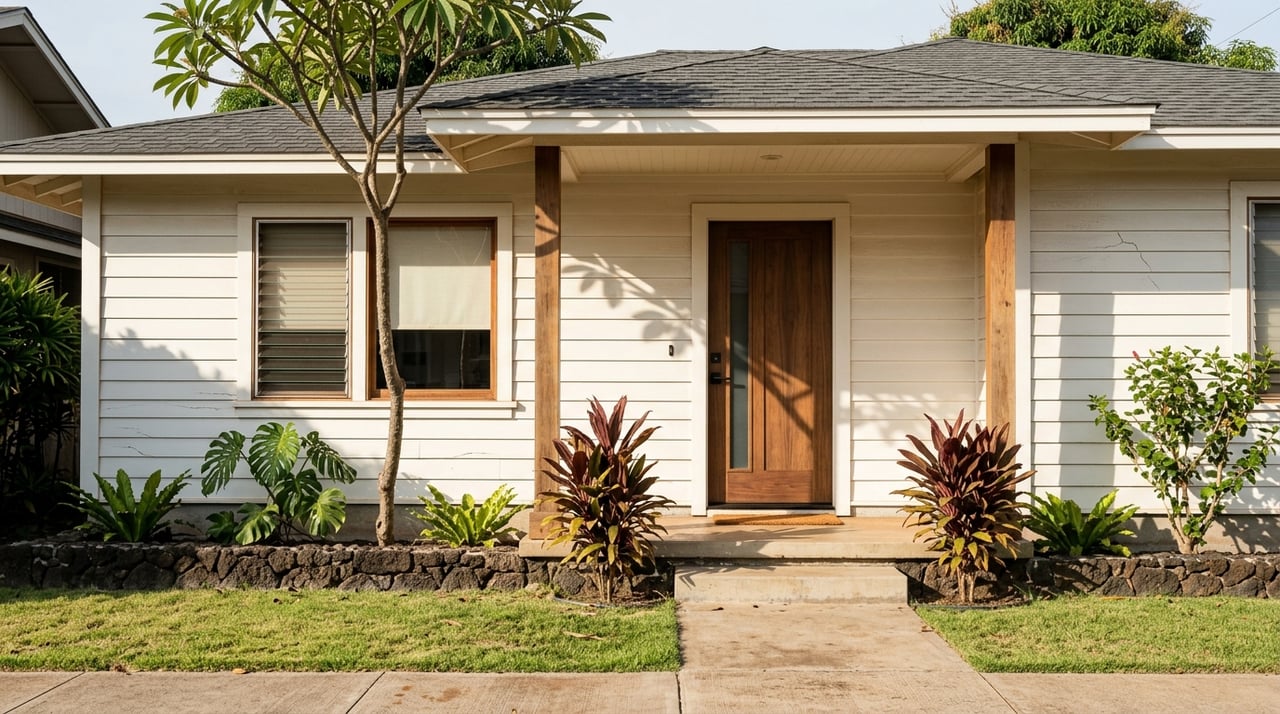
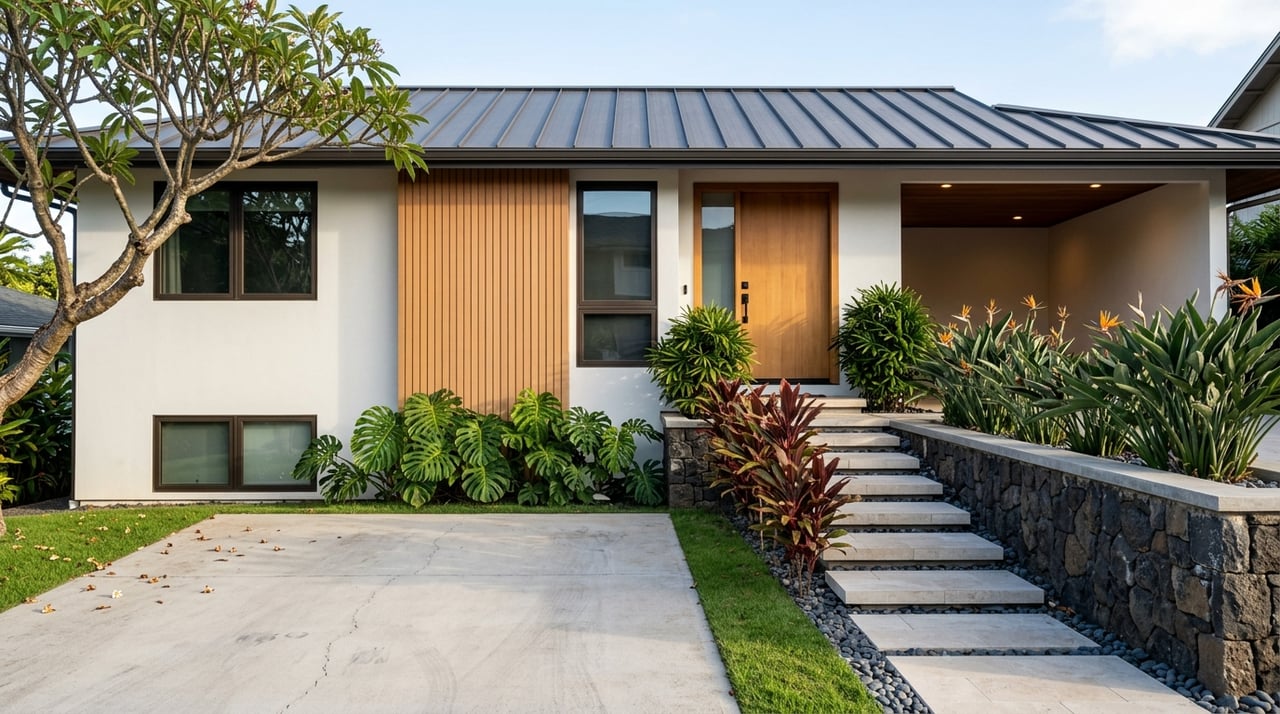
Aiea’s housing stock is best understood as a mix of established single-family neighborhoods and higher-density pockets. County planning notes that older parts of Aiea and Pearl City are predominantly single-family, while townhouse neighborhoods appear in places such as Waiau, Newtown, and Pearlridge.
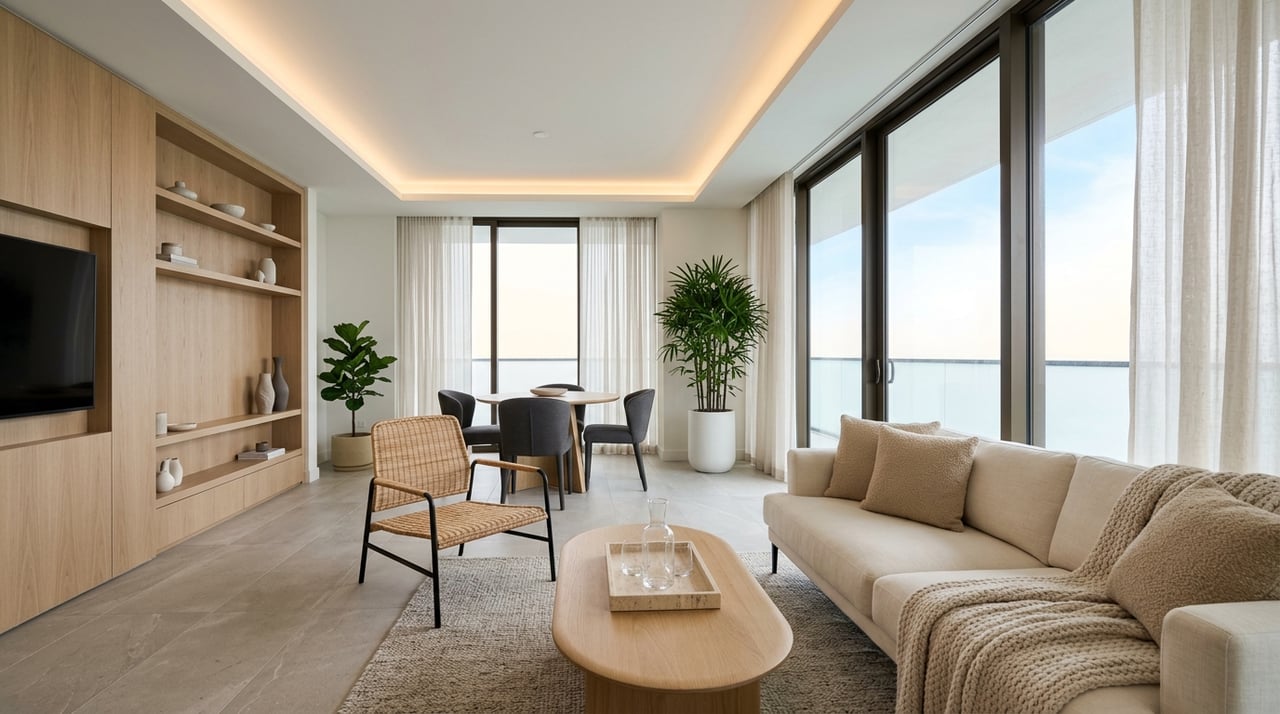
The same planning framework identifies Pearlridge as a regional town center with retail, office space, high-density apartments, light industrial uses, a medical complex, and community facilities. For you, that means Aiea can offer several housing formats depending on your goals, from a lower-maintenance condo or townhouse to a more traditional detached home.
Aiea is about fit, not bargain pricing
A common assumption is that moving outside Honolulu automatically means lower housing costs. In Aiea, the data points in a different direction.
Census QuickFacts reports an owner-occupied housing unit rate of 75.0% in Aiea, along with a median owner-occupied value of $1,065,700. Median selected monthly owner costs with a mortgage are $3,304, and median gross rent is $2,844.
By comparison, Honolulu County’s medians are $897,500 for owner-occupied value, $3,111 for monthly owner costs with a mortgage, and $2,083 for gross rent. Urban Honolulu shows a median owner-occupied value of $843,400 and a lower owner-occupancy rate of 48.9%.
The takeaway is clear: Aiea is generally not the lower-cost alternative many people expect. It is better viewed as a convenience-first suburban market where buyers and renters may pay more for location, access, and established housing patterns.
Commute realities in Aiea
For many professionals, commute quality is the real deciding factor. Census data shows a 24.6-minute mean travel time to work for Aiea workers, compared with 26.7 minutes for Honolulu County.
That suggests Aiea can offer a shorter commute than the countywide average, while still functioning as a car-oriented community. It is not the same as living in a walk-first urban neighborhood, but for many working professionals, that is not the goal.
A driving-oriented lifestyle
County planning describes the Aiea-Pearl City area as automobile-oriented, with commercial activity concentrated in shopping centers and along highway frontages. If you prefer to run errands, commute, and move through your week by car, that setup may feel efficient.
If you want a pedestrian-first environment with a downtown street grid, Aiea may feel less aligned with your lifestyle. In other words, Aiea works best when your priorities center on mobility by car, practical access, and daily convenience.
Daily life in Aiea
Aiea offers more than a strategic commute. It also has everyday anchors that make life simpler for professionals with limited free time.
Pearlridge convenience
County planning identifies Pearlridge as the Pearl Harbor regional town center, with retail, office uses, high-density apartments, a medical complex, and community facilities. This makes the area feel more self-contained than many people expect.
For a busy schedule, that can be a meaningful advantage. Shopping, services, and medical appointments are concentrated in an area already built around access and convenience.
Outdoor access nearby
The state describes the Aiea Loop Trail as 4.8 miles long, beginning and ending in the park. Keaīwa Heiau State Recreation Area also sits above Aiea and Pearl Harbor.
That gives you an easy way to add outdoor time to a week dominated by work and commuting. If balance matters to you, Aiea offers quick access to recreation without needing to drive across the island for a nature break.
Ownership costs to keep in mind
If you are considering buying in Aiea, property taxes and carrying costs deserve a close look. Honolulu County’s FY 2025-26 residential real-property tax rate is $3.50 per $1,000 of net taxable value.
The county also offers a home-exemption program that can reduce taxable value by $120,000 for eligible owners. Final tax amounts can vary based on classification and exemption status, so it is important to review how a specific property is categorized before you make a decision.
Who Aiea may suit best
Aiea can be a strong fit if your housing search is driven by practical priorities and schedule demands. It tends to make the most sense for buyers and renters who value access over trendiness and routine over novelty.
You may want to give Aiea serious consideration if you are:
- Working at Pearl Harbor or Joint Base Pearl Harbor-Hickam
- Based at Pali Momi Medical Center or nearby clinics
- Commuting to Tripler Army Medical Center
- Splitting time between Central Oahu and Honolulu medical facilities
- Looking for established neighborhoods and multiple housing types
- Comfortable with a car-oriented lifestyle
The bottom line on Aiea housing
Aiea is not the right answer because it is cheaper. Based on current Census and county data, it often is not. Its real strength is that it offers central access, established housing, retail convenience, and proximity to major military and medical job centers.
For Pearl Harbor personnel and medical professionals, that combination can be hard to beat. If your goal is to make daily life more efficient while staying in an established Oahu community, Aiea deserves a close look.
If you want tailored guidance on Aiea housing, commute-driven home searches, or relocation strategy on Oahu, Seiko Ono offers discreet, high-touch support designed to help you move with clarity and confidence.
FAQs
Is Aiea a good place to live for Pearl Harbor workers?
- Yes. Aiea is a practical option for Pearl Harbor workers because it is near Joint Base Pearl Harbor-Hickam and connected by major highways and arterials.
Is Aiea a good fit for medical professionals on Oahu?
- Yes. Aiea is especially relevant for medical professionals because Pali Momi Medical Center is located in Aiea, and Tripler Army Medical Center and downtown Honolulu hospitals are accessible through the same freeway network.
Is Aiea cheaper than living closer to Honolulu?
- Usually not. Census data shows Aiea has higher median owner-occupied home values, higher monthly owner costs with a mortgage, and higher median gross rent than Honolulu County overall.
What kind of housing is available in Aiea?
- Aiea offers a mix of established single-family neighborhoods, townhouses in nearby areas such as Waiau, Newtown, and Pearlridge, and higher-density housing near the Pearlridge regional town center.
Is Aiea walkable for daily living?
- Aiea is better understood as a driving-oriented area. County planning describes the area as automobile-focused, with retail and commercial uses concentrated in shopping centers and along highway corridors.
What property tax rate applies to residential homes in Honolulu County?
- Honolulu County’s FY 2025-26 residential real-property tax rate is $3.50 per $1,000 of net taxable value, with possible reductions through the county’s home-exemption program for eligible owners.